Registration in Progress · China

RSRFA-100

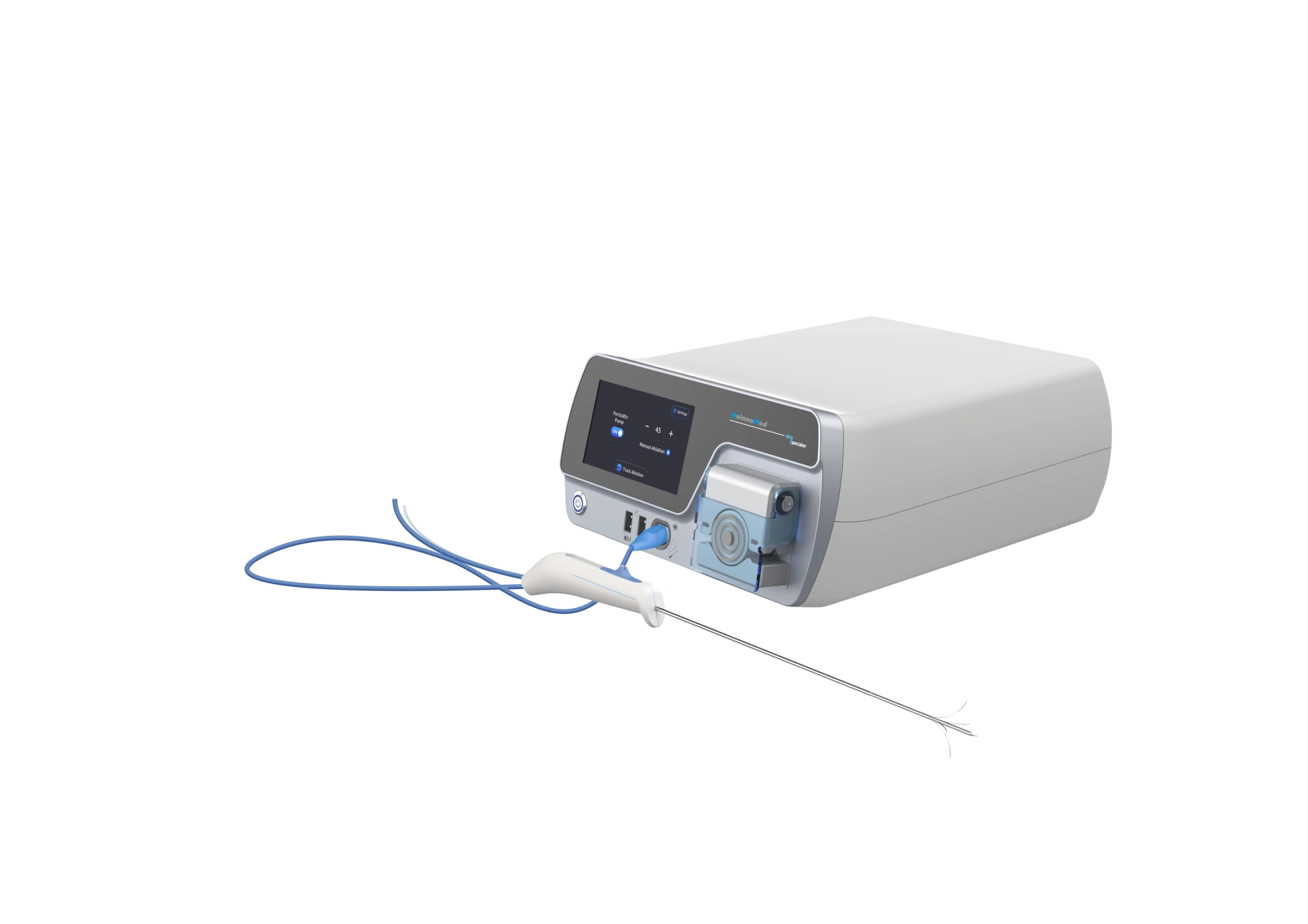
RF ablation system

RF ablation with temperature and impedance feedback.

For product evaluation and collaboration inquiries. Market availability is subject to local registration.

RSRFA-100 human medical system

Designed around the ablation workflow.

Electrode-specific presets and four-point temperature feedback in L-type automatic mode.

No manual power
or time setting

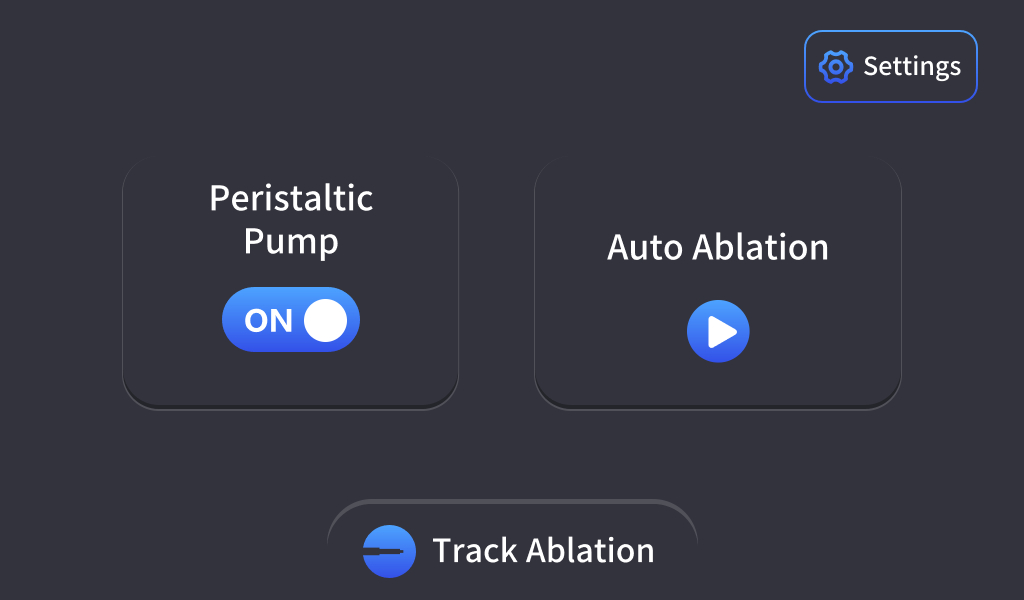
The system uses electrode-specific presets and adjusts power using temperature and impedance feedback.

Initial powerPreset
DurationPreset

Initial settings match the electrode; power adjusts during ablation.

RSRFA-100 automatic ablation interface with preset power and duration
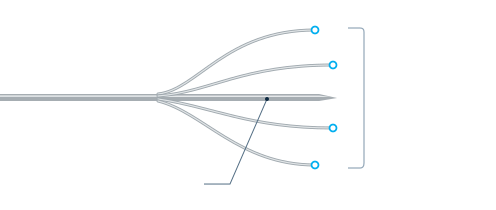
L-type electrode: RF output and four separate temperature-sensing locations

Four-point
temperature feedback

Four sensing tines provide temperature readings at four locations, alongside power, impedance and time.

The electrode defines the workflow.

L-type automatic and T-type manual configurations for product evaluation. Registration is in progress in China; intended applications remain subject to approval.

L-type electrode

Automatic mode · Liver tumor application under evaluation

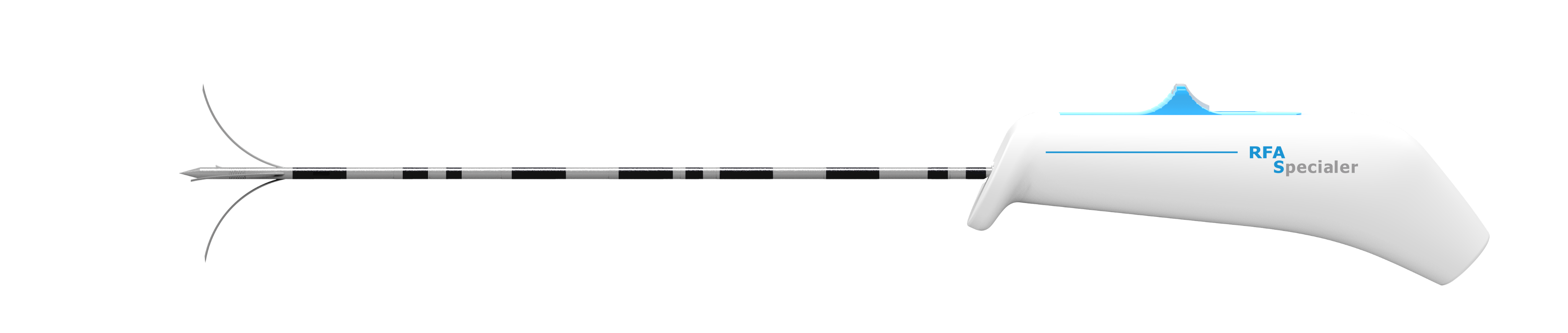
L-type electrode structure with RF segment and four sensing tines
Main electrode: RF outputFour tines: temperature sensing

The main electrode delivers RF energy. Four deployable sensing tines measure local temperature at four discrete locations.

T-type electrode

Manual mode · Benign thyroid nodule application under evaluation

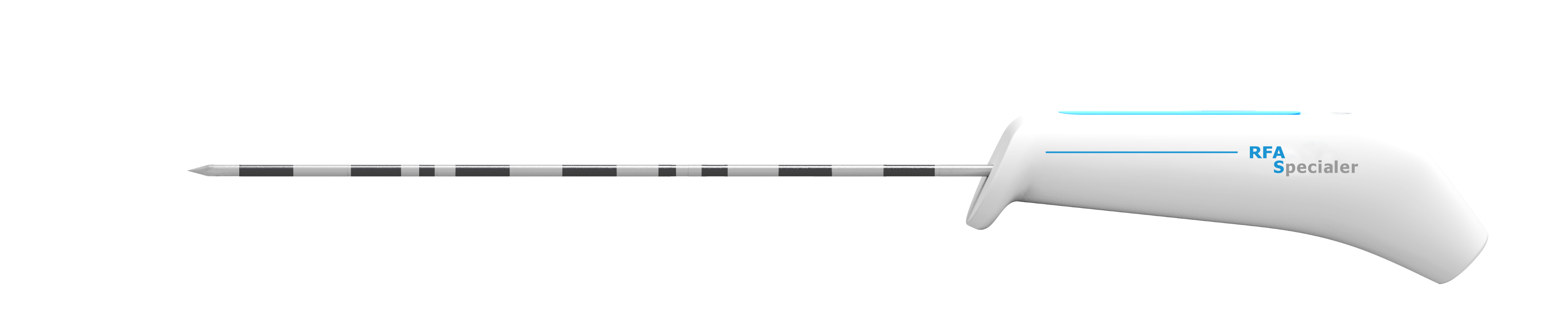
T-type straight electrode schematicStraight electrode · Operator-set power

Manual power setting with temperature-based power reduction and impedance-based termination.

Supports the separate needle-tract mode. No deployable temperature-sensing tines.

RF energy, with mode-specific feedback.

A visual introduction to energy delivery, cooling and output control.

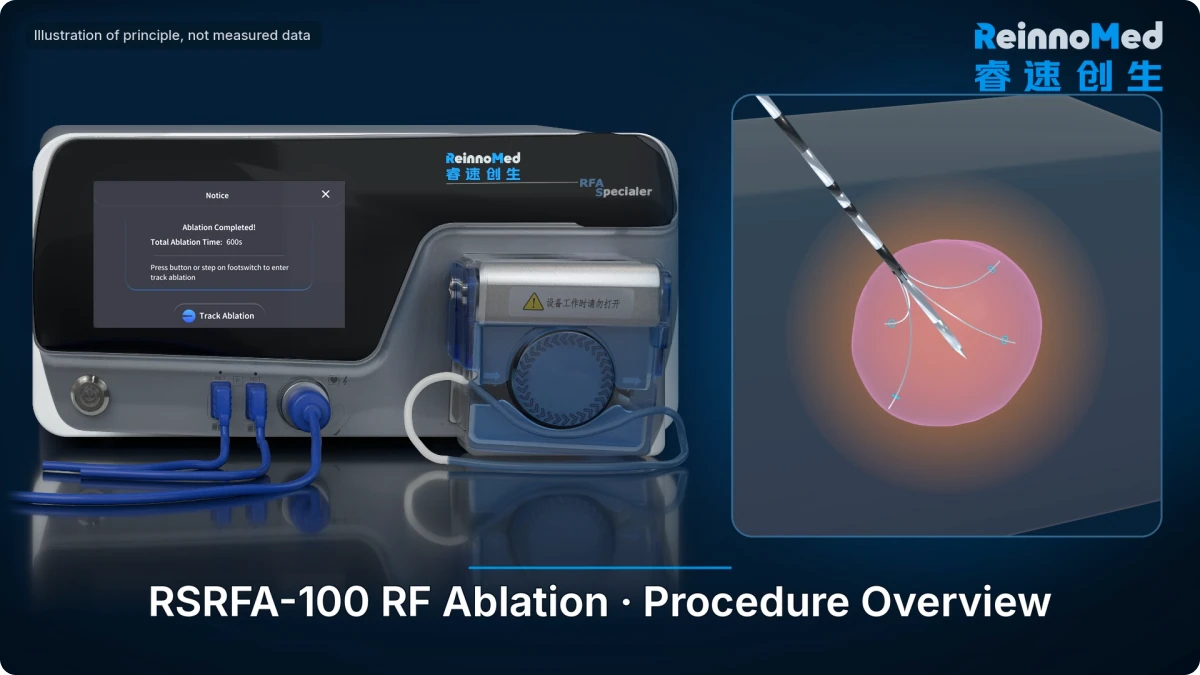
RSRFA-100 RF ablation principle overview, conceptual illustration
Play to watch the principle film. It does not loop. Request related documentation ›

Energy delivery

The connected electrode delivers 450 kHz RF energy into the target tissue.

Feedback control

L-type automatic mode adjusts power using temperature and impedance. T-type manual mode follows its own monitoring and termination rules.

Integrated cooling

The peristaltic pump circulates cooling fluid during automatic and manual main ablation.

A dedicated mode for the withdrawal path.

L-type and T-type electrodes support needle-tract treatment as a separate stage after main ablation.

Separate power setting

Needle-tract power is set independently of the main-ablation workflow.

Operator-controlled output

The clinician decides whether to use the mode and when to stop output.

Cooling and temperature monitoring are inactive in needle-tract mode.

Technical specifications

Model
RSRFA-100
Operating frequency
450 kHz
Electrode configurations
L-type / T-type
Optional footswitch
RSFS-200
View full specificationsMode-specific output, electrode models and system configuration.

Generator & output

Model / software
RSRFA-100 / V1
Operating frequency
450 kHz
Rated main-ablation output
120 W ±20% at 50 Ω
Rated needle-tract output
200 W ±20% at 50 Ω
Temperature detection
10–90°C; accuracy ±3°C
Impedance detection
Automatic / needle tract: 30–1000 Ω; manual: 30–400 Ω
Optional footswitch
RSFS-200

Electrodes & modes

L-type reference model
RSNEL-15-3
L-type main mode
Automatic; preset power and time
Temperature sensing
Four sensing tines on L-type
T-type reference model
RSNET-10-1
T-type main mode
Manual; power setting 5–120 W
Needle-tract power setting
5–200 W; operator-controlled stop
Cooling
Integrated peristaltic pump; main ablation only
Electrode use
Single patient, single procedure

Configuration shown: RSRFA-100 · Software V1. Registration in progress in China. Information is for technical and cooperation discussions.

Product resources

Browse Resources

Discuss RSRFA-100 with our team.

Ask about product information, electrode configurations and technical evaluation.

Request Documentation